
The Misconception Leading to Risks in Orthodontic Treatment
Commencing orthodontic treatment is a significant investment aimed at improving tooth structure and boosting confidence. However, the questions patients most frequently search and worry about are: "I have braces, and cleaning is very difficult; what should I do?" and "Is using dental floss truly necessary?".
In reality, orthodontic appliances (brackets and wires) create "blind spots" that conventional toothbrushes cannot reach, causing food debris and bacteria to accumulate up to twice as easily. Neglecting dental floss thus becomes the Number 1 risk leading to tooth decay and gingivitis during orthodontic treatment. This article is prepared to recommend the correct methods and tools, ensuring you can clean effectively even with orthodontic appliances present.
1. Mechanical Rationale: Why Orthodontics Makes Cleaning More Challenging
Orthodontics introduces new areas prone to bacterial accumulation, necessitating specialized tools for cleaning:
- Area Under the Archwire: This area is entirely inaccessible by a toothbrush and is where food debris often gets trapped.
- Bracket Base and Interdental Spaces: The appliances create blind spots, facilitating easy bacteria accumulation, which makes cleaning interdental spaces with conventional methods impossible.
2. Consequences of Neglecting Dental Floss (Risks Faced by Patients)
Lack of discipline in using dental floss leads to long-term oral health damage that is difficult to fix, a primary concern for all dentists:
- Tooth Decay and White Spots: The area around the bracket base is where bacteria accumulate most easily. If neglected, tooth decay occurs, and once the appliance is removed, white spots become clearly visible on the tooth surface, often requiring further restoration.
- Gingivitis and Treatment Delays: Bacterial plaque accumulation causes gums to become swollen, inflamed, and bleed easily. This condition slows down tooth movement , inevitably prolonging the orthodontic treatment duration.
- Increased Unnecessary Costs: The need to treat tooth decay or gum disease before continuing with the treatment results in additional unnecessary expenses and delays the overall progress.
3. Tools and Correct Flossing Method (Solutions from the Dentist)
Since conventional dental floss cannot pass under the orthodontic wire, dentists recommend specialized tools:
3.1. Specialized Orthodontic Floss (Superfloss)
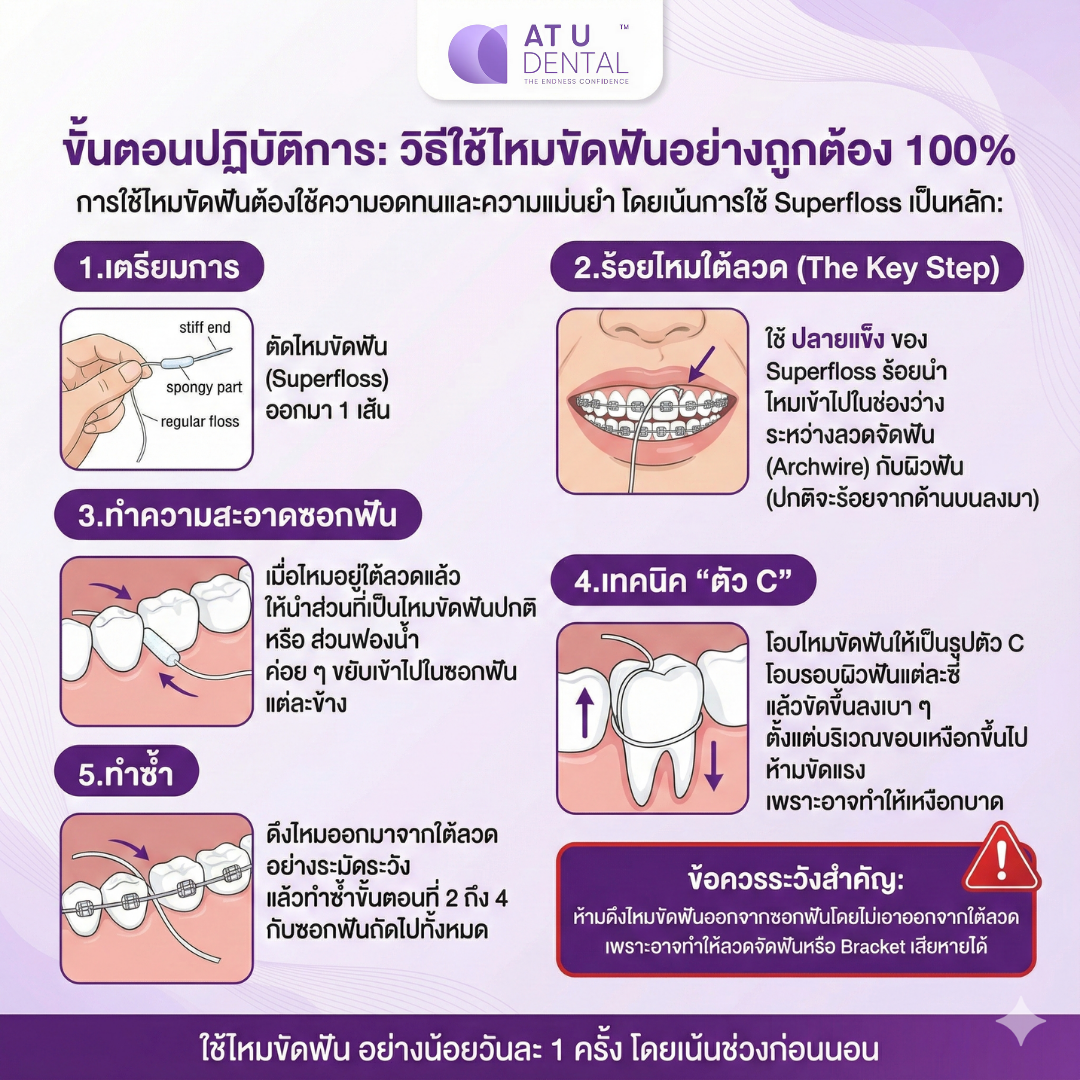
- This floss is designed specifically for orthodontic patients, coming with three sections in one strand:
3.2. Correct Operational Steps
- Threading Under the Wire: Use the Stiff End of Superfloss to guide the floss through the space between the archwire and the tooth surface (usually threaded from the top downwards).
- Cleaning the Interdental Space: Once the floss is under the wire, gently move the Spongy Floss Section into each interdental space.
- The "C-Shape" Technique: Wrap the dental floss around the tooth in a C-shape and gently move it up and down from the gum line upwards.
- Precautions: Dental floss should be used at least once daily.
Investing in Discipline for a Perfect Smile
ความสำเร็จของ ทันตกรรมจัดฟัน ไม่ได้ขึ้นอยู่กับฝีมือของ ทันตแพทย์ เพียงอย่างเดียว แต่ขึ้นอยู่กับ วินัย ของคนไข้ 50% การใช้ ไหมขัดฟัน อย่างถูกวิธีและสม่ำเสมอ อย่างน้อยวันละ 1 ครั้ง คือการปกป้องการลงทุนครั้งใหญ่ของคุณ และรับประกันว่าเมื่อถึงวันถอดเครื่องมือ คุณจะได้รับรอยยิ้มที่สะอาด แข็งแรง และสมบูรณ์แบบที่สุดค่ะ






At U Dental Co., Ltd.
2095/1, Moo 1, Soi Sukhumvit 78, Sukhumvit Road, Samrong Nua Subdistrict, Mueang Samut Prakan District, Samut Prakan Province, 10270

